The Spawning Revolution and Global Vision
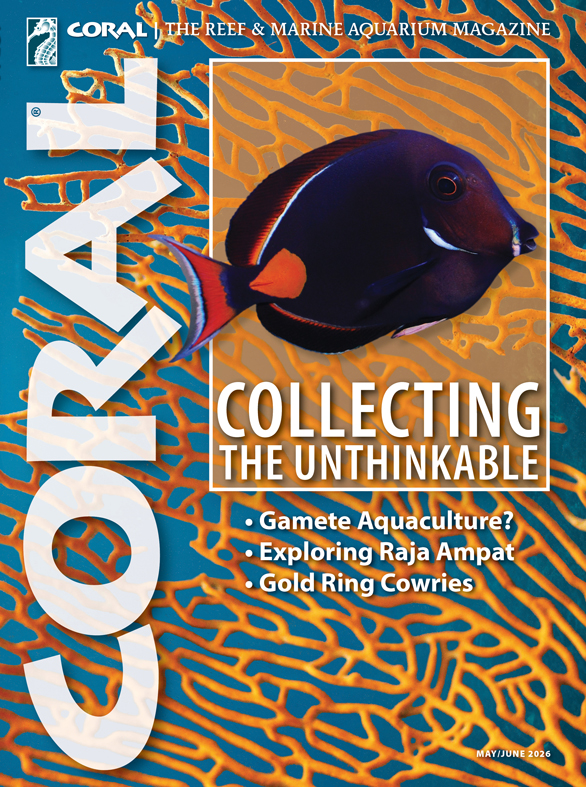
CORAL Magazine’s May/June 2026 issue, themed “Collecting the Unthinkable,” heralds a revolutionary shift in mindset within the saltwater aquarium world. While “collecting” once referred solely to taking livestock from the wild, this issue redefines the term to mean harvesting thousands of gametes and egg bundles released within the aquarium environment. This approach stands as a major turning point, symbolizing the hobby’s transition toward a sustainable and entirely scientific production model that is independent of nature.
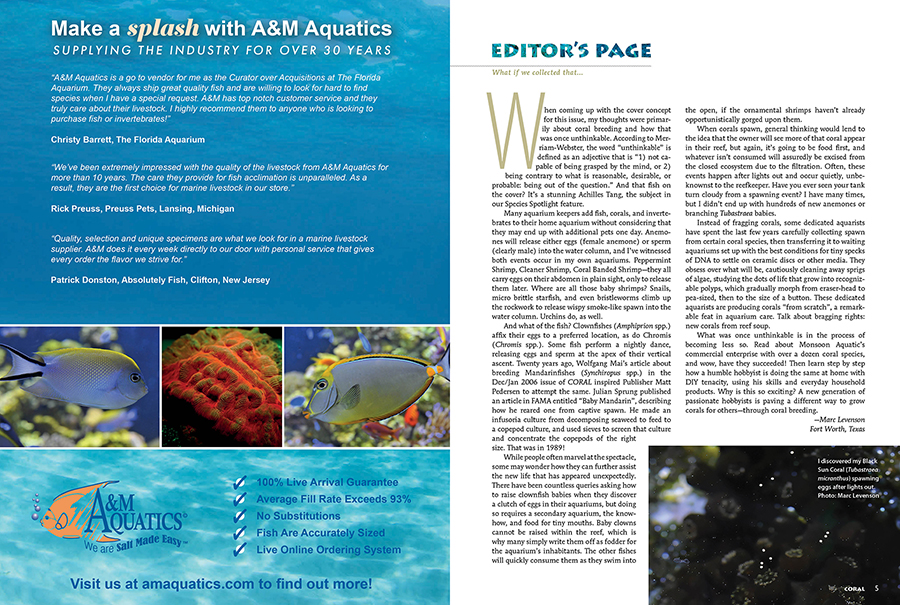
Executive Editor Marc Levenson shares the excitement of these dense spawning moments, which he describes as “coral soup,” emphasizing that the process of sexual reproduction—once considered impossible—is now an achievable goal. According to Levenson, the hobby has moved beyond the phase of mere survival and evolved into a stage of intentional breeding and raising new generations. This vision transforms aquarists from simple consumers into true guardians who help shape the future of reefs.
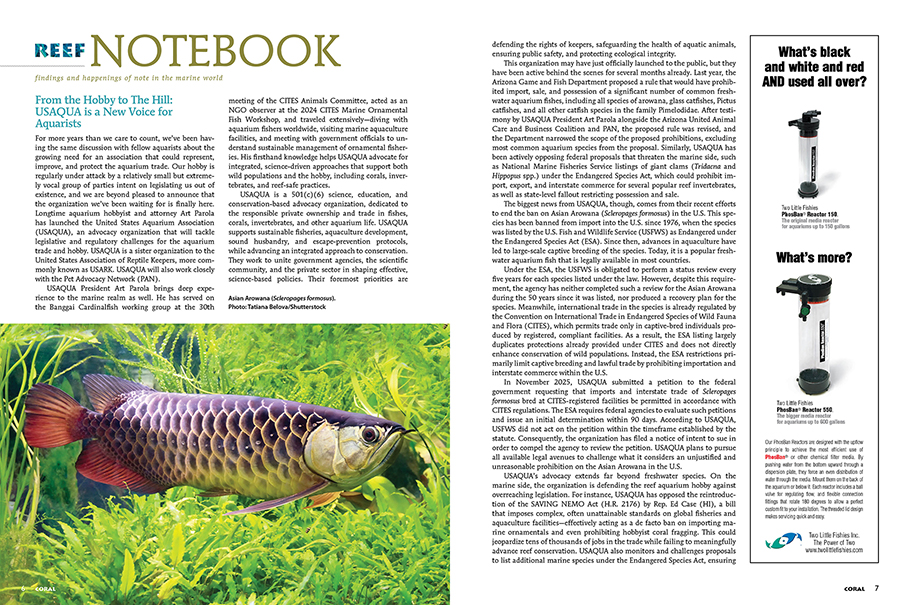
The Reef Notebook section addresses the political and technical layers of the hobby. The newly established USAQUA (United States Aquarium Association) has begun active lobbying efforts in Washington to defend the rights of hobbyists and the industry. On the technical side, André Luty explains, using scientific data, how high light intensity increases thermal stress on corals, reminding readers that reducing light levels during particularly hot periods is critical for coral health.
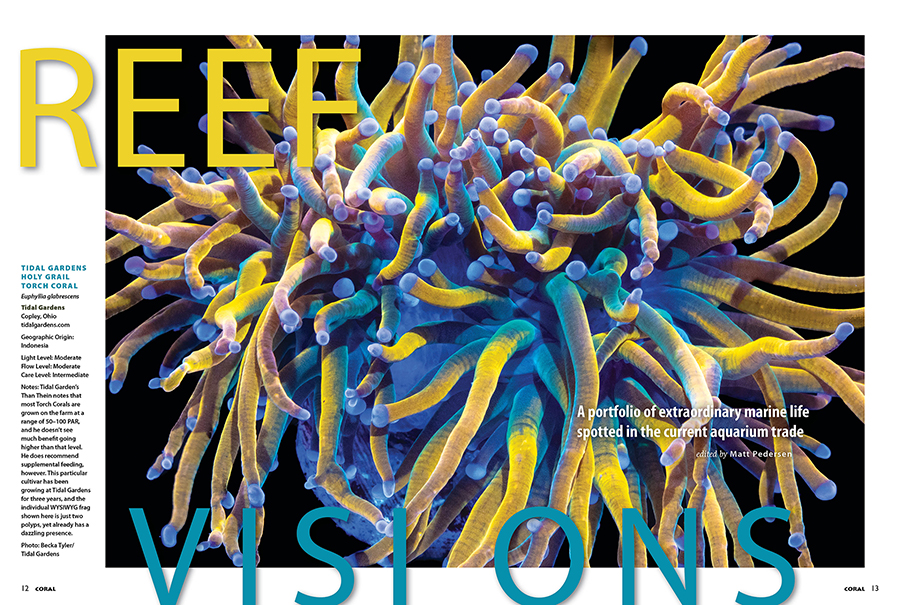
In the Reef Visions section, Matt Pedersen brings together the rarest and most genetically preserved inhabitants of the saltwater aquarium world, offering readers a true visual feast. This segment highlights extraordinary species that captivate with their unique color forms and patterns, specifically those obtained through selective breeding and sustainable collection methods. Curated by Matt Pedersen, these images push the aesthetic boundaries of the hobby while simultaneously drawing attention to the biological value of these creatures.
Feature Articles – Science, Sustainability and Species
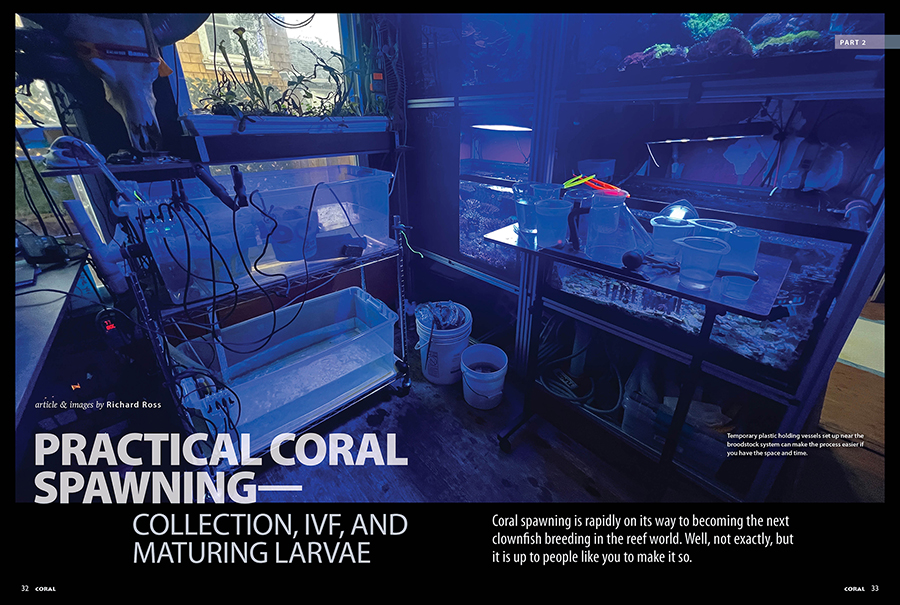
Practical Coral Spawning: A Guide to Home Propagation
In one of the most compelling articles of this issue, Richard Ross explores practical methods for achieving sexual reproduction of corals within home saltwater aquarium systems. Ross provides a step-by-step guide on how to collect thousands of gamete bundles from colonies measuring approximately 10–15 cm (4–6 inches) and details the fertilization process. The article explains how critical environmental factors, such as water temperature and lunar cycles, can be synchronized using digital controllers to provide hobbyists with a professional roadmap.
These methods encourage a production model where hobbyists do more than just keep livestock alive; they directly contribute to the future of reefs. IVF (In Vitro Fertilization) techniques, which can be applied even in small-scale systems, push the boundaries of modern aquarium care. This practical guide serves as an invaluable resource for any aquarist committed to the sustainable approach of Collecting the Unthinkable.
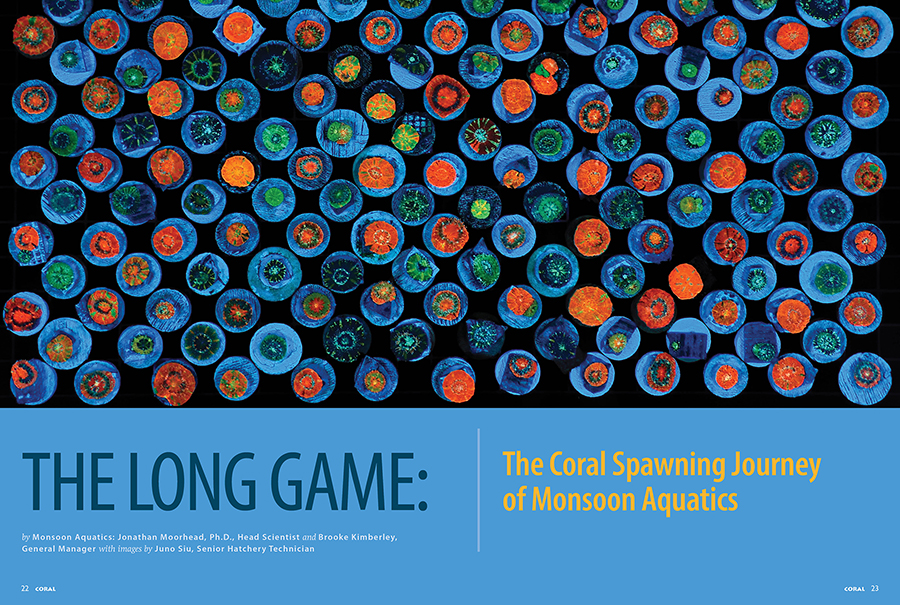
The Long Game: Monsoon Aquatics’ Production Journey
Dr. Jonathan Moorhead and Brooke Kimberley discuss over a decade of sectoral success in coral production at Monsoon Aquatics. The article details how more than 12 coral species are produced on a commercial scale and outlines the technical challenges faced along the way. This long-term journey proves the success of a modern model that reduces reliance on wild-collection methods by merging scientific research with commercial sustainability.
In the future of the saltwater aquarium world, such professional production facilities are expected to play a critical role in reef conservation projects. The article further details the adaptation success of captive-bred livestock within the aquarium environment and the benefits this process brings to the ecosystem. The experiences of Monsoon Aquatics offer an inspiring vision for both industry players and conscious hobbyists.
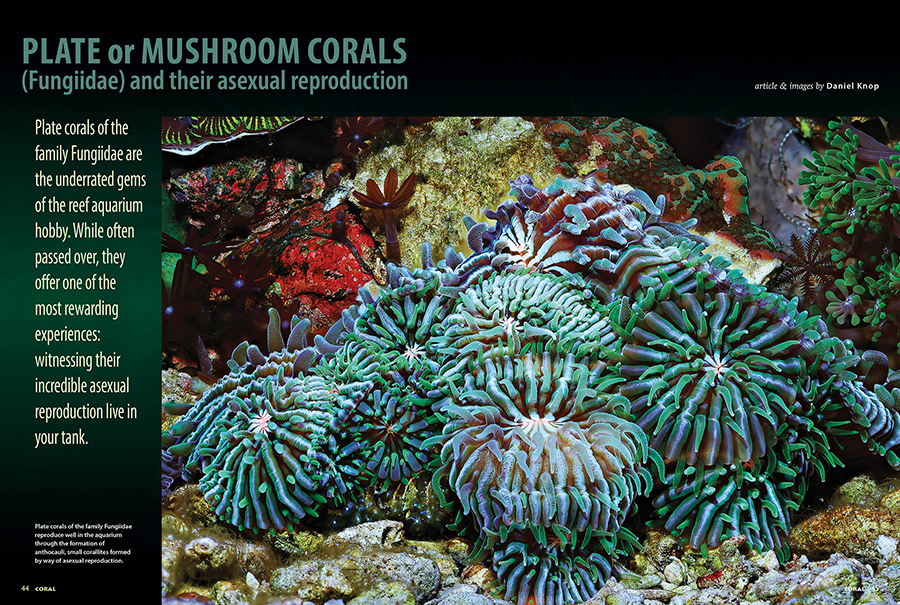
Plate or Mushroom Corals: The World of the Fungiidae Family
Daniel Knop examines the biology and aquarium care details of the Fungiidae family, commonly known as plate or mushroom corals. The article provides a comprehensive explanation of their life strategies in the oceans and their asexual reproduction methods, known as “anthocauli” formation. Knop discusses why flow and lighting requirements must be specialized when planning the placement of these corals within saltwater aquarium systems.
The article highlights the resilience and contributions to the biological cycle provided by these species, which typically live freely on the sand bed. Practical tips are offered regarding the trace element balance and feeding habits necessary for the long-term health of Fungiidae members. With their aesthetic appeal and fascinating reproductive forms, these corals are presented as an indispensable option for aquarists of all levels.
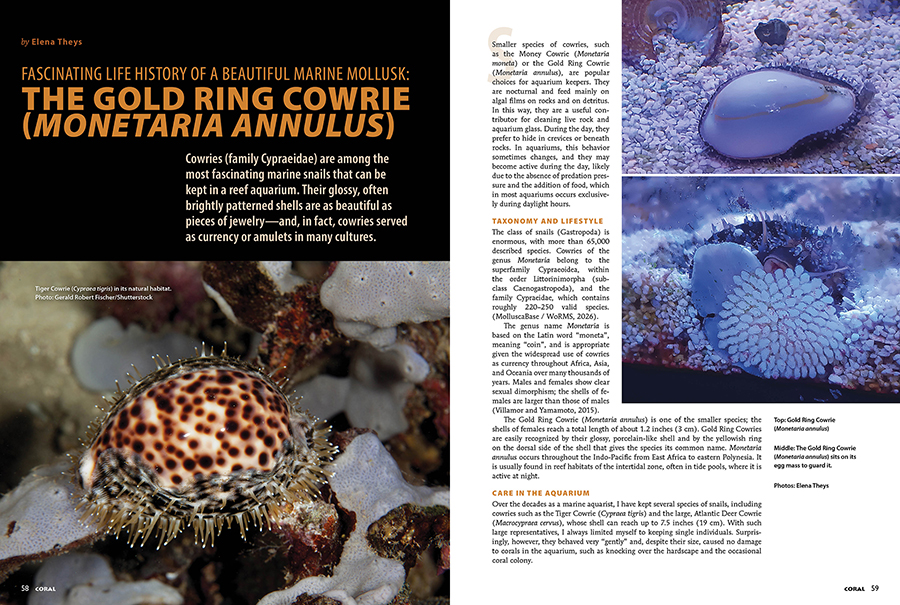
The Gold Ring Cowrie: A Small Marine Gem
Elena Theys explores the fascinating life history and ecosystem benefits of Monetaria annulus within the aquarium environment. Known as the “Gold Ring Cowrie,” these creatures are of critical importance to saltwater aquarium owners, not only for their aesthetic beauty but also for their effective algae-grazing capabilities. Theys explains the specific conditions required for their long-term survival while examining their reproductive cycles and behaviors in their natural habitat.
The article highlights the role these small but effective creatures play in preserving biodiversity within reef systems. Their hardiness and compatibility with other invertebrates make them ideal for aquarists looking to establish a sustainable cleaning crew. Theys supports her findings with scientific data, demonstrating how these animals add significant value to the aquarium environment when provided with proper care.
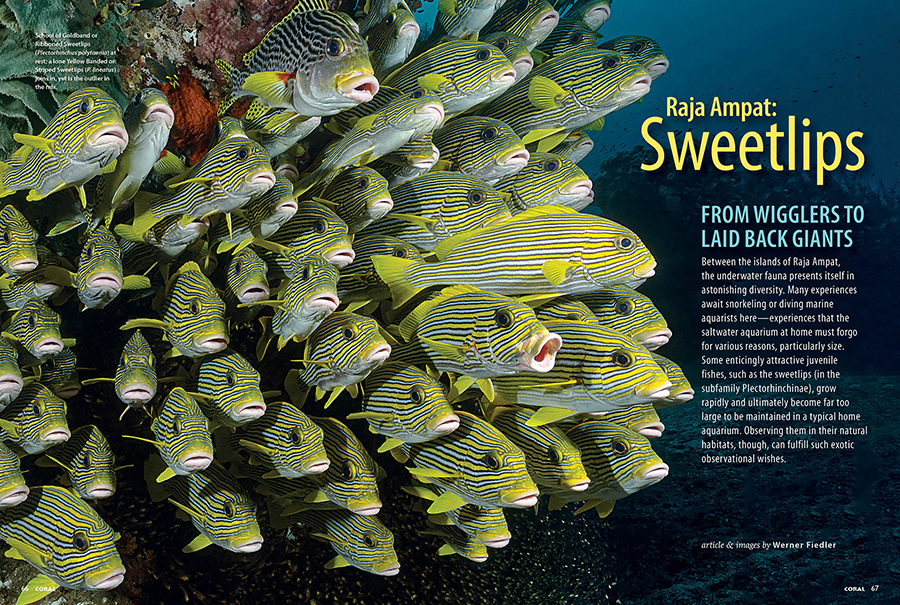
Raja Ampat: Sweetlips and Underwater Abundance
Werner Fiedler takes readers on a unique journey to Raja Ampat, one of the most biodiverse regions in the world. The article focuses on the massive schools of “Sweetlips” fish, an iconic species of the area, and their complex natural habitats. Supported by Fiedler’s striking photography, this travelogue serves as a visual guide for hobbyists wishing to understand the aesthetics and complexity of natural reef structures.
These observations from the wild serve as a reminder of how critical it is to mimic nature and protect the ecosystem as a whole in saltwater aquarium designs. The article discusses how fish behaviors in the wild are reflected in the aquarium environment and how this natural balance can be transferred to our systems. Fiedler concludes by highlighting the delicate balance of Raja Ampat that must be preserved, inviting readers to increase their environmental awareness.
Technical Mastery and Ethical Horizons
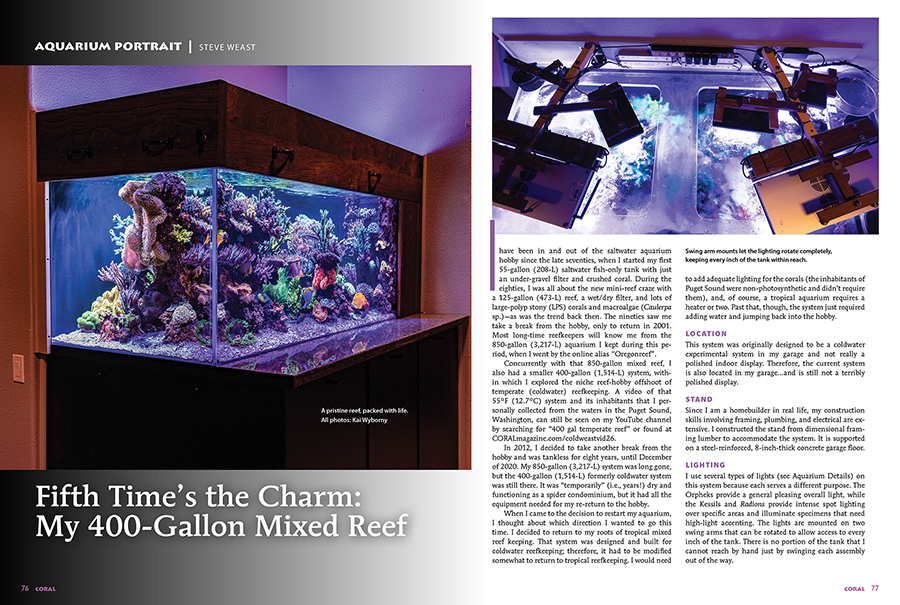
Aquarium Portrait: Steve Weast’s 400-Gallon (1514-Liter) Minimalist World
Steve Weast once again proves how aesthetic simplicity and technical excellence can be harmoniously blended with his new system, which has a volume of approximately 1514 liters (400 gallons). This “mixed reef” aquarium stands out with a minimalist design that focuses on the use of negative space rather than crowded rock structures. Weast plans the placement of each coral by considering its growth form, ensuring that even large colonies measuring 100–150 cm (40–60 inches) remain healthy.
Behind the scenes of this system lies a disciplined automation and maintenance routine. Weast utilizes advanced equipment integrated with APEX control units to ensure the stability of water parameters. The article shares technical data regarding the flow and filtration details necessary to keep large coral colonies healthy. This portrait serves as both a visual inspiration and a technical guide for hobbyists seeking sustainable success in a large-scale system.
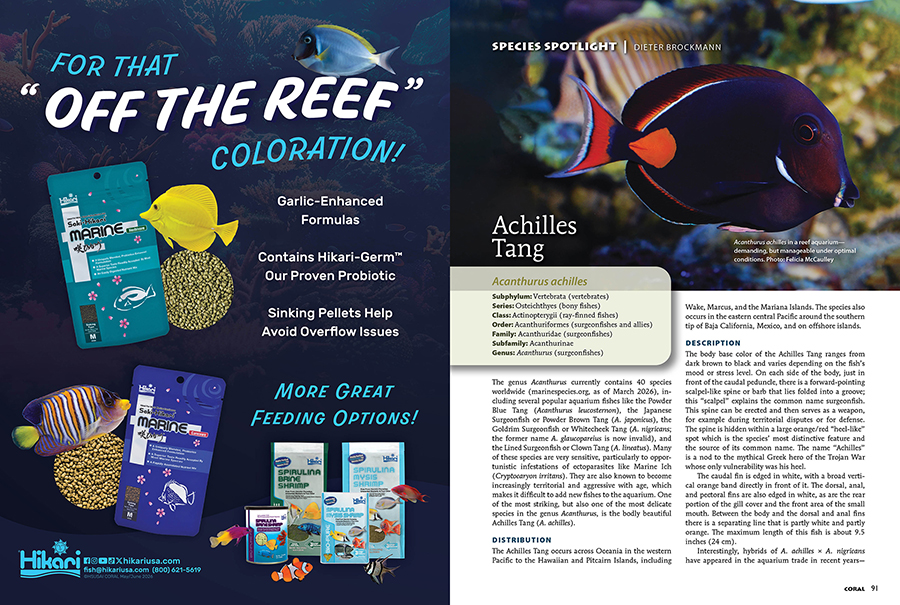
Species Spotlight: Achilles Tang (Acanthurus achilles)
Dr. Dieter Brockmann presents a comprehensive technical review of the Achilles Tang, one of the most prestigious yet challenging species in the saltwater aquarium world. The article details the specific requirements of this species, which inhabits high-energy surge zones in nature. Brockmann emphasizes that even in systems measuring 150–180 cm (60–70 inches) in length, the Achilles Tang requires exceptionally strong water movement and high oxygen levels to remain healthy.
The author provides critical insights into the feeding habits and methods for supporting the immune system of this sensitive species. The importance of quarantine processes and stress management for the Achilles Tang is explained in technical detail. This article not only appeals to experienced aquarists but also reinforces the principles of “stable water chemistry,” which is the key to success in the long-term care of this captivating fish.
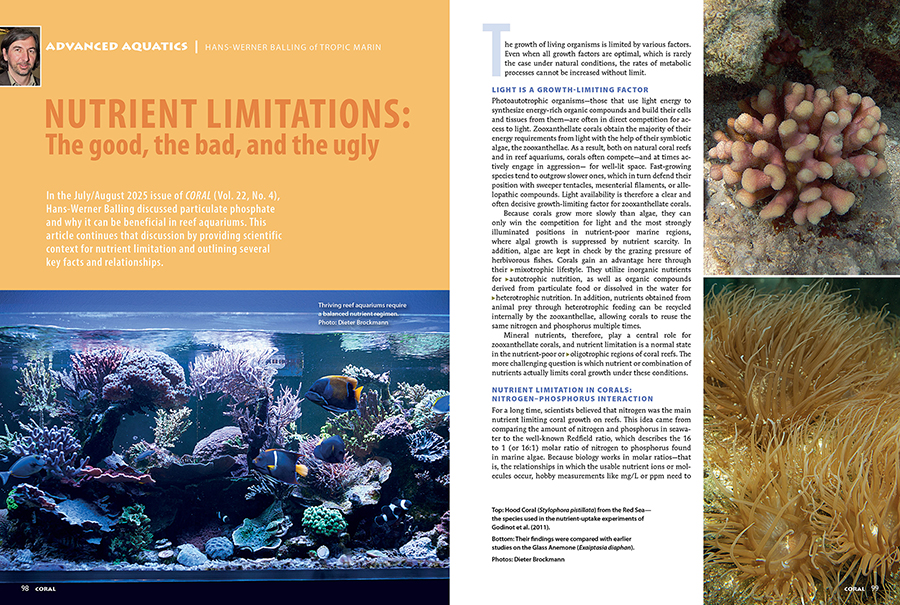
Advanced Aquatics: Nutrient Limitations and Algae Control
Hans-Werner Balling addresses nutrient limitations, one of the most complex topics in modern reef management, from a scientific perspective. Balling explains how deficiencies in elements such as nitrate, phosphate, and iron negatively affect coral health and how these conditions can trigger the growth of undesirable algae species. The article provides mathematical approaches for optimizing nutrient balance in systems with a volume of approximately 200–400 liters (53–106 gallons).
According to Balling, the primary way to combat algae in the aquarium environment is to increase the corals’ capacity to utilize these elements. This section details the relationship between light intensity and nutrient consumption, discussing which supplements hobbyists should use to maintain the biological balance in their systems. This technical analysis provides data that serves as a guide for those wishing to establish a sustainable ecosystem in saltwater aquarium systems.
Reef Life: A Call for Reef Conservation and Ethics
Alex Rose, in the “Reef Life” column, explores the delicate balance between the aesthetic enjoyment of the hobby and the preservation of natural ecosystems. Rose emphasizes that aquarium owners are not merely hobbyists but “ambassadors” for the future of global reefs. The article highlights the critical role of supporting sustainable collection and production methods in preserving marine biodiversity. This piece offers an inspiring conclusion, inviting readers to consider the real-world impact of every step they take.
This discussion is vital for anyone committed to Collecting the Unthinkable, as it aligns personal passion with global conservation. By understanding our role as stewards, the act of breeding and raising corals becomes a meaningful contribution to the ocean’s resilience. Rose’s insights ensure that as we advance in the hobby, we do so with a profound respect for the biological heritage of our planet.
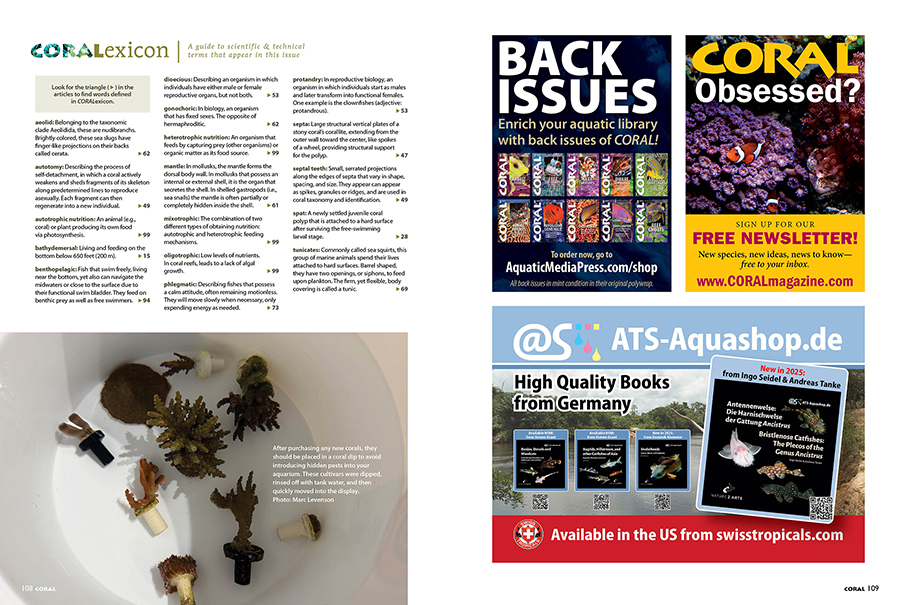
Glossary and Sectoral Guide
The Coralexicon section explains complex scientific terms and biological definitions in a language accessible to all hobbyists. This glossary transforms this specific issue—rich with heavy technical topics like sexual reproduction and water chemistry—into a comprehensive educational tool.
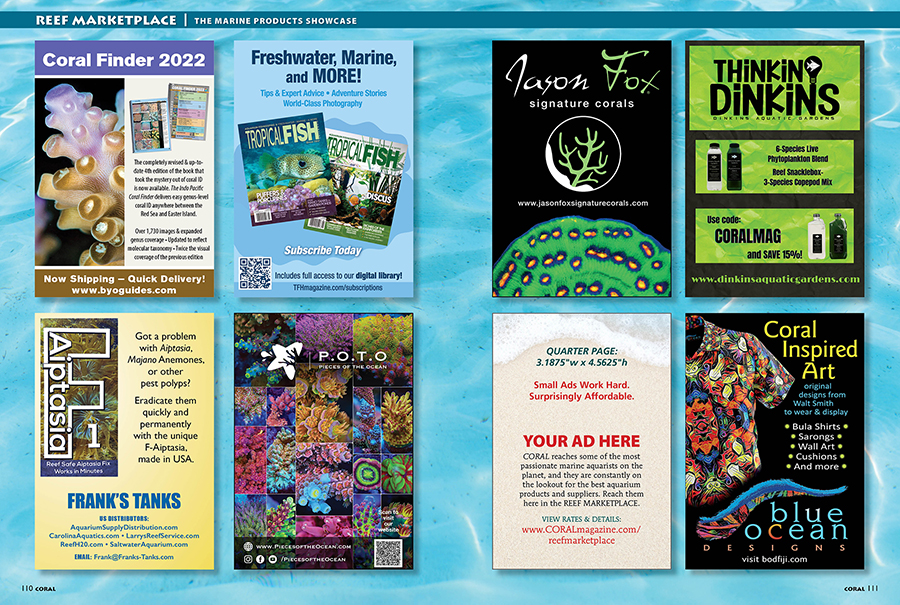
Featured in the closing pages, the Reef Marketplace and Advertiser Index provides an up-to-date guide to the industry’s newest equipment, automation systems, and reliable livestock suppliers, enabling aquarists to quickly access the resources they need.
CORAL Magazine is one of the world’s leading print publications for the Saltwater Aquarium industry. If you’d like to subscribe and read all the content, you can start your Subscription Here. You can find the previous issue, Coralia Bacchanalia / CORAL Magazine Review. We’re eagerly awaiting the next issue!
Join the Discussion! Do you have a question or a tip to share about “Collecting The Unthinkable / CORAL Magazine Review”? Whether you’re a beginner or a professional, we value your experience—leave a comment below to help our community grow! For more personalized advice and in-depth discussions, feel free to start your own thread in the Reef Network Saltwater Aquarium Forum. We’d be happy to help you. Let’s build a better reef together!
###
Editor’s Note: You can see the original Turkish-language version of Niron’s review at https://reefnetwork.com/tr/dusunulmeyeni-toplamak-coral-dergisi-incelemesi/